Conference Themes and Topics
Theme 1: Climate-Resilient Water Systems
Climate change is fundamentally altering the conditions under which water systems operate. Increasingly frequent and intense extremes require water infrastructure and management approaches that can perform under changing and uncertain conditions. This theme explores how water systems, cities, catchments, and communities can become more resilient to these changes.
Topics include:
- flood and drought management
- blue-green infrastructure and sponge-city approaches
- nature-based solutions
- integrated urban and catchment water management
- resilient infrastructure planning and asset management
- climate-risk assessment and decision-making under uncertainty
- adaptation of existing infrastructure to future conditions
Theme 2: Digital and Data-Driven Water Management
Digital technologies are rapidly changing how water systems are monitored, understood, designed, and operated. Sensors, real-time monitoring, artificial intelligence, machine learning, digital twins, and advanced modeling provide unprecedented opportunities to improve efficiency, anticipate risks, and support better decisions. Yet, digitalization also raises important questions about data quality, accessibility, cybersecurity, transparency, skills, and the appropriate role of automation in critical infrastructure.
This theme explores the opportunities of digitalization while encouraging discussion about where digitalization creates genuine environmental and societal value, what new risks or dependencies it may introduce, and how water professionals can use emerging technologies responsibly.
Topics include:
- artificial intelligence (AI) and machine learning(ML) in water management
- digital twins and advanced modeling
- smart water networks and infrastructure
- sensors, IoT, and real-time monitoring
- soft sensors and data-driven process monitoring
- remote sensing
- predictive maintenance and asset management
- automation and process optimization
- open data, interoperability, and data management
- cybersecurity and resilience of digital water infrastructure
Theme 3: Water Quality and Pollution Prevention
Emerging contaminants, diffuse pollution, urban and industrial emissions, agricultural pressures, and improving analytical methods are changing our understanding of contamination and its consequences. At the same time, there is growing recognition that treatment alone cannot provide a sustainable response to continuously increasing numbers and quantities of pollutants. Prevention, source control, and integrated approaches across the entire water cycle are therefore becoming increasingly important.
This theme explores the current strategies for protecting water quality and ensuring the safety of drinking water sources with a systems’ perspective.
Topics include:
- emerging contaminants (e.g., PFAS, pharmaceuticals, pesticides, personal-care products, and other micropollutants)
- microplastics and tire-wear particles
- nutrients and diffuse pollution
- urban stormwater quality
- drinking-water protection
- wastewater and advanced treatment technologies
- monitoring and analytical methods
- environmental fate and risk assessment
- catchment-based water-quality management
- One Health perspectives
- producer responsibility and upstream interventions
Theme 4: Circular and Resource-Efficient Water Sector
The transition toward a circular economy is redefining wastewater and other residual streams as potential sources of water, nutrients, energy, and materials. Water circularity, including water reuse, recycling, and the closing of water loops, is becoming increasingly important as water scarcity and resource constraints intensify. At the same time, the water sector itself must reduce its demand for energy and resources, as well as its contribution to greenhouse gas emissions.
This theme explores opportunities to move from linear treatment systems toward water systems that recover resources, minimize environmental footprints, and create value while maintaining reliable services.
Topics include:
- water reuse and circularity
- water–energy–resource nexus approaches
- nutrient recovery, including carbon, phosphorus, and nitrogen
- energy recovery and energy-positive treatment
- heat recovery from wastewater
- greenhouse-gas mitigation
- low-energy and low-resource treatment technologies
- industrial water circularity
- life-cycle assessment
Venue
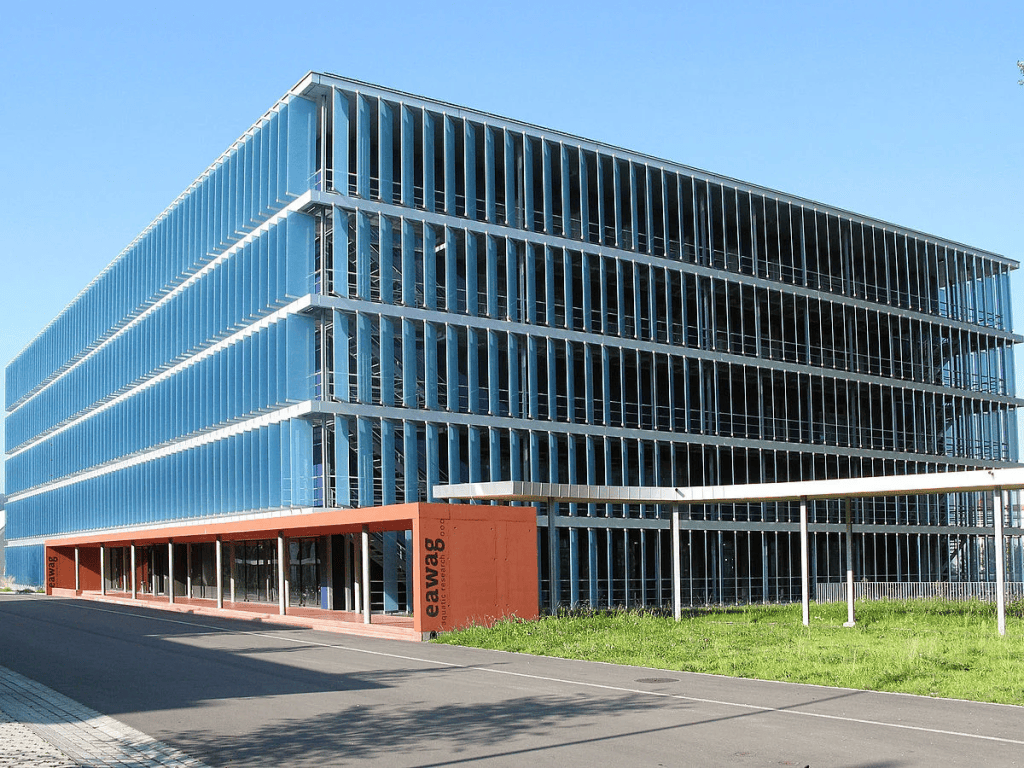
The conference takes place at Eawag (the Swiss Federal Institute of Aquatic Science and Technology) in Dübendorf, Switzerland. As a globally recognized institution for water research, Eawag provides the ideal backdrop for bringing researchers and industry together.
Address: Ueberlandstrasse 133, 8600 Dübendorf, Switzerland